Where to Sleep on the Camino Português: Albergues vs Hotels
Updated June 2026
Short answer: you have four broad choices each night — municipal albergues (cheap, communal, first-come), private albergues (bookable dorms, a bit nicer), guesthouses and small hotels (your own room and a real night's sleep), and a self-guided package where an operator books rooms and moves your bags. It isn't about money alone — it's how well you sleep in company, how social you want the walk to be, and how much planning you'll trade for certainty. Light sleepers and couples lean to private rooms; budget and sociable solo walkers lean to albergues; plenty of people mix the two.
| Option | Rough cost / night | Best for |
|---|---|---|
| Municipal albergue | Donation–€15 | Budget, sociable solo walkers, the traditional feel; no booking |
| Private albergue | €15–25 (dorm) | Dorm life with more comfort and the safety net of booking ahead |
| Guesthouse / hotel | ~€50–90 (double, split) | Couples, light sleepers, older walkers — real sleep, your own door |
| Self-guided package | One inclusive price | Guaranteed comfort and zero planning; you still walk every step |
On the Camino Português you have four broad choices each night: municipal albergues (cheap pilgrim dormitories, often donation-based), private albergues and hostels (bookable dorms, a bit nicer), guesthouses and small hotels (your own room and bathroom), and on a self-guided package, hotels booked and bags moved for you. The right answer isn't about money alone — it's about how you sleep, how social you want the walk to be, and how much you want to plan. Here's the honest version of each, so you can pick before you go rather than at 5pm with sore feet.
Municipal & parish albergues — the classic pilgrim bed
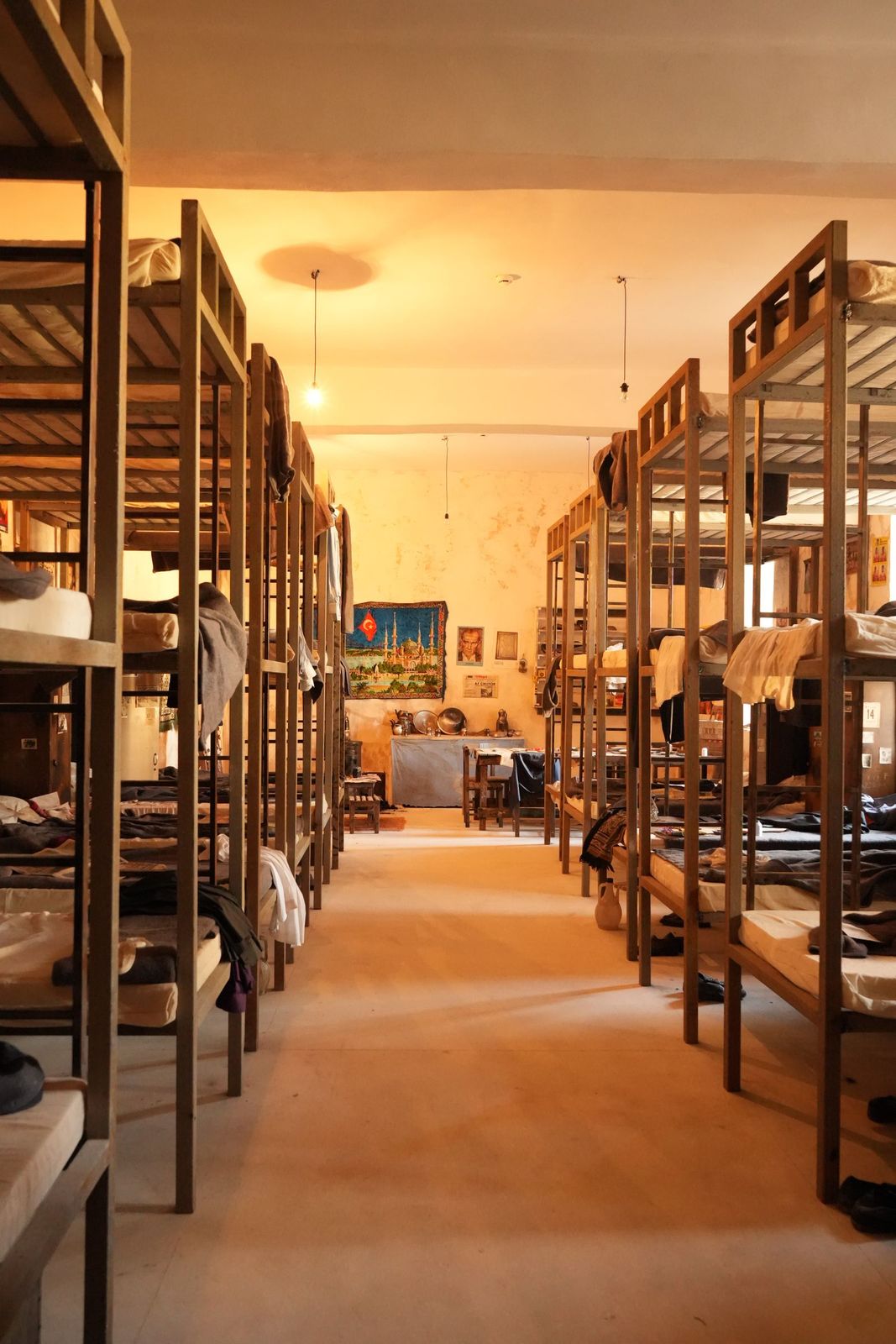
This is the Camino of the postcards: bunk beds in a shared dormitory, run by the town or a parish, often "donativo" (pay what you can) or just a few euros. The atmosphere is the draw — you share the room, the kitchen and the evening with pilgrims from everywhere, and friendships form fast over shared pasta and tired feet.
The honest downsides: you can't book most of them — it's first-come, so on busy stages you may arrive to a full house and walk on. Bathrooms are shared, lights-out is early, and at least one neighbour will snore (pack earplugs). If you sleep badly in company, this is a hard way to walk for two weeks.
Best for: budget walkers, sociable solo pilgrims, and anyone who wants the traditional, communal Camino and doesn't mind roughing it.
Private albergues & hostels — the comfortable middle of the dorm world
A step up: privately run, usually bookable a day or two ahead, with smaller dorms, better bathrooms, sometimes a few private rooms, and often a washing machine and a little café. You keep much of the pilgrim sociability but lose the worst of the uncertainty.
The trade-off: you pay more than a municipal bunk, and the cheapest, most authentic donativo magic is diluted. But for a lot of walkers this is the sweet spot — affordable, social, and you can actually reserve a bed.
Best for: walkers who want the dorm experience with a bit more comfort and the safety net of booking ahead.
Guesthouses & small hotels — your own room, your own door
A private double with an en-suite bathroom, a proper breakfast, and a door that closes on the day. Towns along the Portuguese Way — Ponte de Lima, Pontevedra, Barcelos — have lovely family-run guesthouses and small hotels, and Portugal/Galicia keep them well-priced by European standards.
Why people choose it: real sleep. After 25km, a quiet private room and your own shower is the thing that lets you get up and do it again tomorrow. You lose some of the dormitory camaraderie, but you can still find it over dinner.
Best for: couples, light sleepers, older walkers, and anyone who'd rather not gamble on a bunk being free.
What is a self-guided package — hotels booked, bags moved?
The hands-off option: a trusted local operator books a hand-picked room for you every night, moves your luggage ahead to each one, and hands you route notes. You still walk every single step — you just never plan a bed, drag a heavy pack, or arrive somewhere with nowhere to stay.
The trade-off: it costs more than doing it yourself, and it's less spontaneous — your nights are set in advance. In return you get certainty and a genuinely light walk, which on the long stages is worth a great deal. Several reputable operators run this kind of trip on the Portuguese Way; if it appeals, compare a couple before you book.
Best for: walkers short on planning time, those who want guaranteed comfort, and anyone who wants to spend their two weeks walking rather than problem-solving.
What does it all cost?
Roughly: municipal albergues from donation up to about €8–15, private dorms €15–25, a guesthouse double very roughly €50–90 split between two, and a self-guided package folding rooms and bag transfer into one price. Accommodation is the biggest single lever on your total spend, so it's worth deciding deliberately. The full money picture — beds, food, bags and extras — is in what the Camino Português really costs.
What does a night actually look like in each?
It helps to picture the evening, because that's what you're really choosing between. In a municipal albergue, you arrive, show your pilgrim passport, get a stamp and a bunk, claim a bottom bed if you're lucky, queue for a shower, then drift into a shared kitchen or a nearby café where ten nationalities compare blisters over cheap wine. Lights tend to go out around 10pm and the room stirs before six, because someone always wants an early start. It's warm, chaotic and deeply communal — and you will not get a perfect night's sleep.
In a guesthouse or small hotel, you arrive to your own room, shower without a queue, hang your washing on the balcony, and head out to dinner on your own clock. You miss the dorm banter unless you go looking for it, but you wake genuinely rested — and over two weeks, rest compounds. On a self-guided package it's the same private comfort, except your bag is already in the room when you arrive and you never spent a minute arranging it. The question isn't which is "better" — it's which trade you'd rather make, fourteen nights running.
How does booking actually work, afternoon by afternoon?
If you're doing it yourself, your day has a small second job: sorting tomorrow's bed. Most independent walkers settle into a rhythm — over morning coffee or at lunch, they phone or message ahead to the next town and reserve a private room, or simply aim to reach a municipal albergue by early afternoon to beat the rush. It works, but it does mean a slice of every day spent on logistics, and the occasional anxious afternoon when the first two places are full. The busier the season and the closer to Santiago, the more that job weighs. A self-guided package removes it entirely — every night is booked before you take your first step — which is precisely what you're paying for. Neither is wrong; just know which one you're signing up for.
Which booking truths should I know before I go?
- July, August and the weeks around Easter fill up. In high season, book private rooms ahead or you'll be hunting; municipal bunks can fill by mid-afternoon. See when to walk the Camino Português for how busy each month really gets.
- The last 100km is the busiest stretch — from Tui onward the trail fills with pilgrims who started at the border, so beds there go fastest of all.
- You can mix and match. Plenty of walkers do albergues most nights and treat themselves to a private room every third or fourth day. Your wallet and your back will both thank you.
- Carry earplugs and an eye mask whatever you choose — even hotels near old-town squares can be lively, and in a dorm they're survival kit.
What's true of every option?
Wherever you sleep, you sleep better with a lighter pack and a plan. Don't haul a heavy bag to a bunk you then can't get into — pack light and, if you're carrying your own, pack ruthlessly. The Camino packing list will get your bag down to something you barely notice. And for the whole trip in order — route, season, training, beds — start with the complete guide to walking the Camino Português.
Two practical bits help here too: line up your arrival and a first night before you fly, and handle the small set-up — data, transfers, insurance — before you go.
Our honest pick
If you sleep well in company and you're walking on a budget, the albergues are the real Camino and worth it for the camaraderie alone. If you're a light sleeper, a couple, or just want to wake genuinely rested over two weeks, book private rooms — rest compounds, and it's the thing that lets you get up and walk again. Honestly, the happiest setup for most people is the mix: albergues for the nights you want the company, a private room every third or fourth day to actually sleep. Whichever you choose, carry earplugs and book ahead in high season.
Next steps: once you know how you'll sleep, line up the rest — what it all costs, when to walk (and how busy each month gets), and what to pack so your bag's light at the bunk.
Common questions
Where do you sleep on the Camino Português?
You have four broad choices each night: municipal or parish albergues (cheap pilgrim dormitories, often donation-based), private albergues and hostels (bookable dorms, a bit nicer), guesthouses and small hotels (your own room and bathroom), and a self-guided package where an operator books hotels and moves your bags for you. The right choice depends on how you sleep, how social you want the walk to be, and how much you want to plan.
Are albergues or hotels better on the Camino Português?
Neither is better outright — it is a trade. Municipal albergues are cheap and deeply communal but mean bunk beds, shared bathrooms, early lights-out and no booking. Guesthouses and small hotels cost more but give you a private room, real sleep and a door that closes. Many walkers mix the two.
Can you book albergues on the Camino Português in advance?
Most municipal and parish albergues cannot be booked — they are first-come, so on busy stages you may arrive to a full house and walk on. Private albergues and hostels can usually be reserved a day or two ahead, and guesthouses and hotels can be booked normally.
How much does accommodation cost on the Camino Português?
Roughly: municipal albergues from a donation up to about €8–15, private dorms €15–25, and a guesthouse double very roughly €50–90 split between two. Accommodation is the biggest single lever on your total spend, so it is worth deciding deliberately.
When do beds on the Camino Português fill up?
July, August and the weeks around Easter are busiest, and the last 100km from Tui onward is the most crowded stretch of all because pilgrims join at the border. In high season, book private rooms ahead; municipal bunks can fill by mid-afternoon. Carry earplugs and an eye mask whatever you choose.